


Stick War: Legacy
4.867.81K Reviews
App Specs
- Version
- 2026.1.787
- Updated On
- License
- Free
- Downloads
- 100,000,000+
- Developer
- Max Games Studios
- Categories
- Strategy
- Platform
- Android, iOS
Screenshots
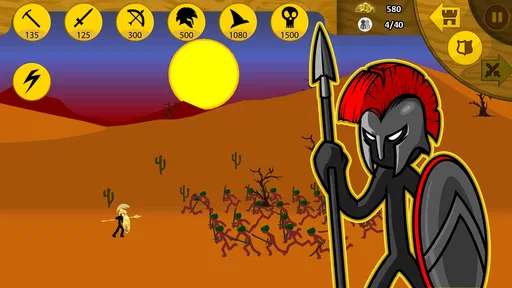
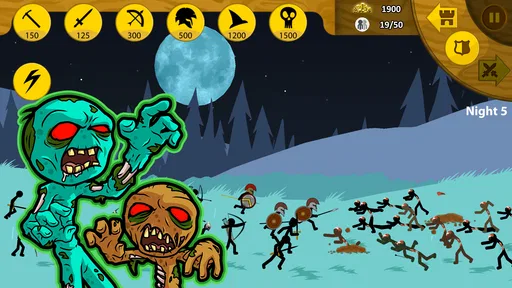
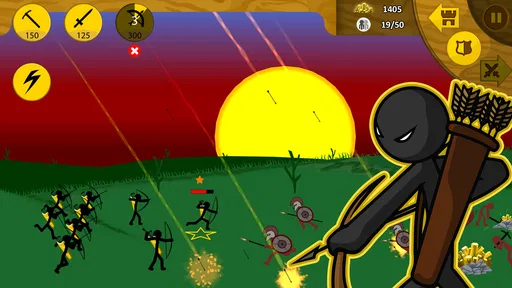
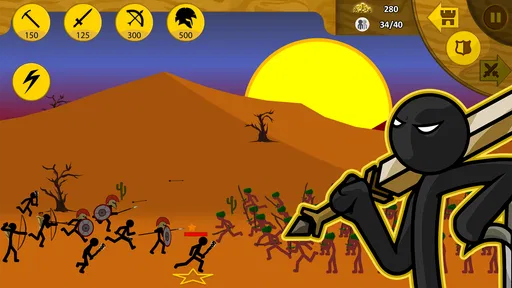
 Analysis by AppCompare
My best advice before opening Stick War: Legacy is to treat the first match as a lesson in timing, not a test you need to ace. This is a strategy game from Max Games Studios, built around managing a stick-figure army in the world of Inamorta. The battles look spare, but the choices about resources, units, and when to attack give them more weight than the art style suggests.
What to expect from the first battles
The appeal is a quick-to-read battlefield with decisions that can change how a fight goes. You are not simply watching two armies collide: you decide how to build up your forces and whether to press forward or protect your side. That makes the game approachable for a newcomer, while still leaving room to learn from a poorly timed push.
It is free to install, with in-app purchases ranging from $0.49 to $104.99 per item. The game is rated Teen, and the current version is 2026.1.787. Its long-running presence is reflected in an average rating of 4.8 from around 3.1 million ratings and over 100 million installs. Those figures suggest a broad audience, but they do not mean every mode or match will suit every player.
Guides and Analysis on Stick War: Legacy
A manageable start, with room to learn
When you begin, focus on understanding the basic rhythm: gather resources, decide what your army needs, and watch how that choice affects the next clash. I would avoid spending everything on one kind of unit just because it looks powerful. A mixed force gives you more ways to respond, and it helps you notice what the opposition is doing before committing to a single plan.
A useful first goal is simply to make one deliberate decision and see its consequence. If an attack stalls, look at whether you built up too slowly, committed too early, or left too little protection behind. That kind of small post-match review is more helpful than restarting immediately and repeating the same approach. You do not need to understand every unit at once to get a satisfying first win.
Finding a strategy that fits the situation
Each level can call for a different balance between offense and defense. I like that the game makes those choices visible: a defensive approach can buy time, while an aggressive one can pay off if your army is ready. The important nuance is that neither style is a universal answer. If a plan is not working, changing the mix of units or waiting for a better moment can be smarter than simply sending more troops.
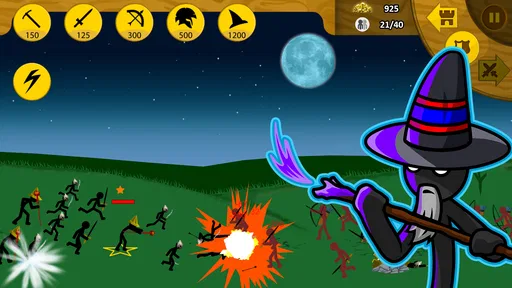
Miners, archers, sword-wielding warriors, and wizards give you distinct roles to consider. Rather than trying to recruit everything immediately, I find it more useful to ask what the current fight seems to demand. Ranged support can change how a clash unfolds, while close-combat units give an attack a different kind of pressure. Think of your lineup as a response to the battlefield, not a fixed recipe you must use in every encounter.
Worth Reading Before You Choose

ESPN’s Live Game View Makes Following Close Games Easier

QuizzLand Review: A Good Fit for Short Trivia Breaks, Not Every Player

Basketball Stars: Multiplayer Is Fast, but Can It Recover When Matches Go Wrong?

WEBTOON Turns Phone Updates Into a Better Reading Routine

Link to Windows Runs on Shared Habits, Not Social Feeds

How Alibaba.com Dominates the B2B Marketplace
Why the simple presentation works
The stick-figure visuals are deliberately uncomplicated, which makes the action easy to follow on a phone screen. The animations help distinguish the units in a crowded fight, and the sound effects give attacks a satisfying sense of impact. I enjoy the clear presentation, though players looking for detailed character art or a realistic battlefield may find the style too minimal.
Sound is a nice part of the atmosphere, but it is not essential to understanding the strategy. Headphones make the clashes and arrows more noticeable; playing quietly still leaves the important decisions in view. That flexibility suits short sessions in everyday settings, when you may not want audio on.
Choosing a mode for the time you have
The campaign gives you a straightforward way to learn through a sequence of battles. Endless mode is a different kind of commitment when you want to see how long your decisions hold up, while tournament mode lets you test your approach against AI opponents. I would start with the campaign if the game is new to you, then move to the other modes when you want a different kind of challenge rather than assuming they are just more campaign levels.
That variety makes the game easier to fit around a busy day. A short break can be enough for a focused attempt at a battle, while a longer stretch is better for exploring a mode and adjusting your tactics. One practical habit is to pause between attempts and change one thing at a time. If you alter your unit mix, timing, and defensive choices all at once, it becomes harder to tell which decision helped.
First Impressions and Gameplay
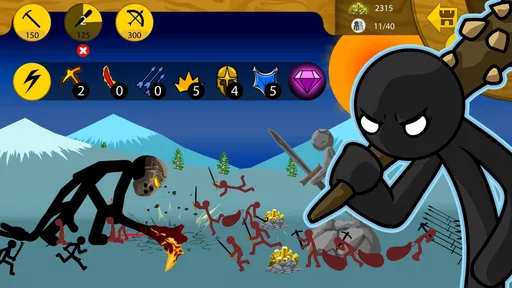
Right off the bat, Stick War: Legacy brings back memories of those early flash games with its stick figure graphics. But don’t let the simplistic design fool you. This game packs a punch when it comes to strategy and engagement. The goal? Command your army of stick figures to conquer enemy territories and ultimately dominate the world of Inamorta. Simple enough, right?
The controls are pretty intuitive. You start by gathering resources, then you decide how to allocate them—whether to build your army or strengthen your defenses. It’s all about balance. I found myself constantly tweaking my strategy, which kept me on my toes. It’s addicting, to say the least.
The Art of Strategy
What I love about this game is the depth it offers. Each level requires a different approach. Do you go all out offense, or do you buckle down and play defense? I’ve tried both, and let me tell you, there’s nothing quite as satisfying as watching your well-planned attack unfold perfectly.
Another cool feature is the variety of units available. You can recruit miners, archers, sword-wielding warriors, and even magical wizards. Each unit has its strengths and weaknesses, and part of the fun is figuring out which combination works best against your foes. It’s like chess but with stick figures and way more action.
Graphics and Sound
Now, let’s talk aesthetics. Stick War: Legacy might not win any awards for cutting-edge graphics, but its charm lies in its simplicity. The stick figures are endearing, and the animations are smooth, making the battles fun to watch. Plus, the game doesn’t lag, which is a huge plus in my book.
The sound effects are surprisingly immersive. The clash of swords and the twang of arrows add an extra layer of excitement. I’d recommend playing with headphones to fully appreciate the audio experience.
What Keeps You Coming Back
Aside from the addictive gameplay, Stick War: Legacy keeps things fresh with various game modes. There's the classic campaign, endless mode for when you’re feeling ambitious, and tournament mode to test your skills against AI opponents. Each mode offers a unique challenge, ensuring that boredom is never an issue.
Another thing that keeps me hooked is the constant updates. The developers seem dedicated to improving the game, frequently adding new content and features. It’s always exciting to log in and see what’s new.
Who will enjoy it—and who may not
I would recommend this to someone who likes compact strategy decisions more than elaborate world-building. It is a good fit if you enjoy adjusting an army plan, seeing the result quickly, and learning through trial and error. The familiar stick-figure look also keeps the battlefield readable, so a first-time strategy player can focus on the choices rather than parsing a busy screen.
It is less suited to someone who wants a deep simulation, a realistic military presentation, or a game built around direct competition with other people. The modes described here center on campaigns, survival-style play, and AI opponents. If your main reason for playing strategy games is human-versus-human tactics, a multiplayer-focused alternative may be a better match. Likewise, if you want a relaxed game with no pressure to reconsider a plan, the tactical back-and-forth may feel more demanding than you want.
Small habits that make attempts more useful
When a battle goes badly, try to identify the point where the plan stopped making sense instead of treating the whole attempt as a failure. Did your economy lag behind your intended army size? Did you attack before your force was ready? Did you leave your defenses too thin? Naming one cause gives the next attempt a purpose. This is especially useful in a game where unit choices and timing interact, because changing everything at once can hide the lesson.
Another useful approach is to build a plan around the job you need done, not around a favorite unit. If you want a sturdy push, consider what supports the front line; if you are holding back, think about how your ranged units and defenses can help you keep control. There is no single lineup that I would blindly carry through every situation. Flexible choices beat repeating a comfortable tactic when the battle is asking for something else.
For a realistic everyday session, I might open the game during a quiet break, play one campaign battle, and stop after deciding what I would change next time. That is a better fit than starting an endless run when I have only a few minutes. If I have a longer stretch, I can explore a different mode and give myself time to learn its rhythm. The game rewards attention, but the simple presentation makes it easy to return without needing to relearn a complicated interface.
How it compares with other mobile strategy games
Compared with strategy games that emphasize base construction, long-term resource planning, or a large map full of systems, this one puts more attention on the immediate army-versus-army problem. That focus is a strength when I want a clear tactical choice rather than a project that needs constant checking. It also means there is less appeal for players who want a broad management layer or social competition to be the center of the experience.
Against other quick battle games, the distinctive draw is the way unit selection and resource decisions feed into the visible clash. It feels more involved than a game where success mostly comes from tapping quickly, but it does not ask me to navigate a complicated presentation before I can act. The trade-off is that repeating similar battles can feel familiar if I am not in the mood to refine a strategy. I would choose it for hands-on tactical play, and choose a more expansive strategy title when I want a deeper campaign economy or multiplayer rivalry.
Practical details before you settle in
The game was released on January 31, 2016, and it requires Android 7.0 or later. It is free to play, but optional purchases are available, so I would treat spending as a personal choice rather than a requirement for trying the core experience. If you prefer not to make purchases, check the purchase controls on your device before handing it to a younger player. The Teen age rating is also worth considering when choosing a game for a family device.
Its popularity is substantial, with around 67,000 written reviews alongside those millions of ratings. That helps explain why a new player is unlikely to be approaching an obscure release, but popularity alone cannot tell you whether its pacing suits you. I would judge it by the first few battles: if you enjoy adjusting your force and learning from a setback, there is a good chance the central loop will click.
Getting past the first point of confusion
The main early confusion is expecting one strong unit or one aggressive order to solve every encounter. The game is about balancing resource gathering, army composition, and defense, so a powerful-looking attack can still be poorly timed. If you are unsure what to do next, make a modest change, observe the result, and keep the rest of your approach steady. That turns a frustrating loss into a useful test rather than a reason to abandon the game.
It is also easy to mistake a simple art style for shallow strategy. I did not need elaborate visuals to read the action, but I did need to pay attention to the choices behind it. The game’s appeal sits in that contrast: it looks approachable while asking you to think about trade-offs. Once that clicks, the first meaningful success feels earned without requiring a complicated setup.
Final Thoughts
All in all, Stick War: Legacy is a must-try for anyone who enjoys strategy games. Its blend of simple graphics, engaging gameplay, and strategic depth makes it a standout in the sea of mobile games. Whether you’re a casual gamer or a seasoned strategist, there’s something in this game for you.
If you’re ready to embark on an epic stick figure adventure, be sure to download Stick War: Legacy from your app store. Just be warned: once you start conquering, it’s hard to stop!
Pros
- Intuitive controls for easy gameplay.
- Diverse units and strategies to explore.
- Engaging campaign mode with story.
- Frequent updates with new features.
- Offline play available.
Cons
- Ads can be intrusive at times.
- In-app purchases for faster progress.
- Graphics are somewhat outdated.
- Limited multiplayer options.
- Difficulty spikes can be frustrating.
FAQs for Stick War: Legacy
What is Stick War: Legacy about?
Stick War: Legacy is a highly engaging strategy game where players command an army of stick figures to conquer territories. Players must manage resources, build and upgrade units, and strategize battles to defeat enemy nations. The game offers a mix of action and strategy, requiring both tactical planning and quick reflexes.
Is Stick War: Legacy free to play?
Yes, Stick War: Legacy is free to download and play on both Android and iOS platforms. However, it includes optional in-app purchases that can enhance gameplay by providing additional resources, units, or cosmetic upgrades. Players can still enjoy the full experience without making any purchases.
What are the system requirements for Stick War: Legacy?
For Android users, Stick War: Legacy requires version 4.4 or higher, while iOS users need version 9.0 or later. The game is lightweight, ensuring smooth performance on most devices. However, for optimal play, ensure your device has sufficient storage and RAM available to handle the game’s graphics and mechanics.
Does Stick War: Legacy feature multiplayer modes?
Stick War: Legacy primarily focuses on a single-player campaign, but it includes a tournament mode where players can compete against AI opponents in a series of challenging battles. While it lacks a real-time multiplayer mode, the game’s various difficulty levels and modes offer plenty of replayability.
How can I improve my skills in Stick War: Legacy?
To improve in Stick War: Legacy, start by mastering resource management, as this is crucial for building and upgrading units. Experiment with different unit combinations and strategies in battles. Additionally, reviewing the game’s tutorials and practicing in lower difficulty modes can help hone your tactical skills.


